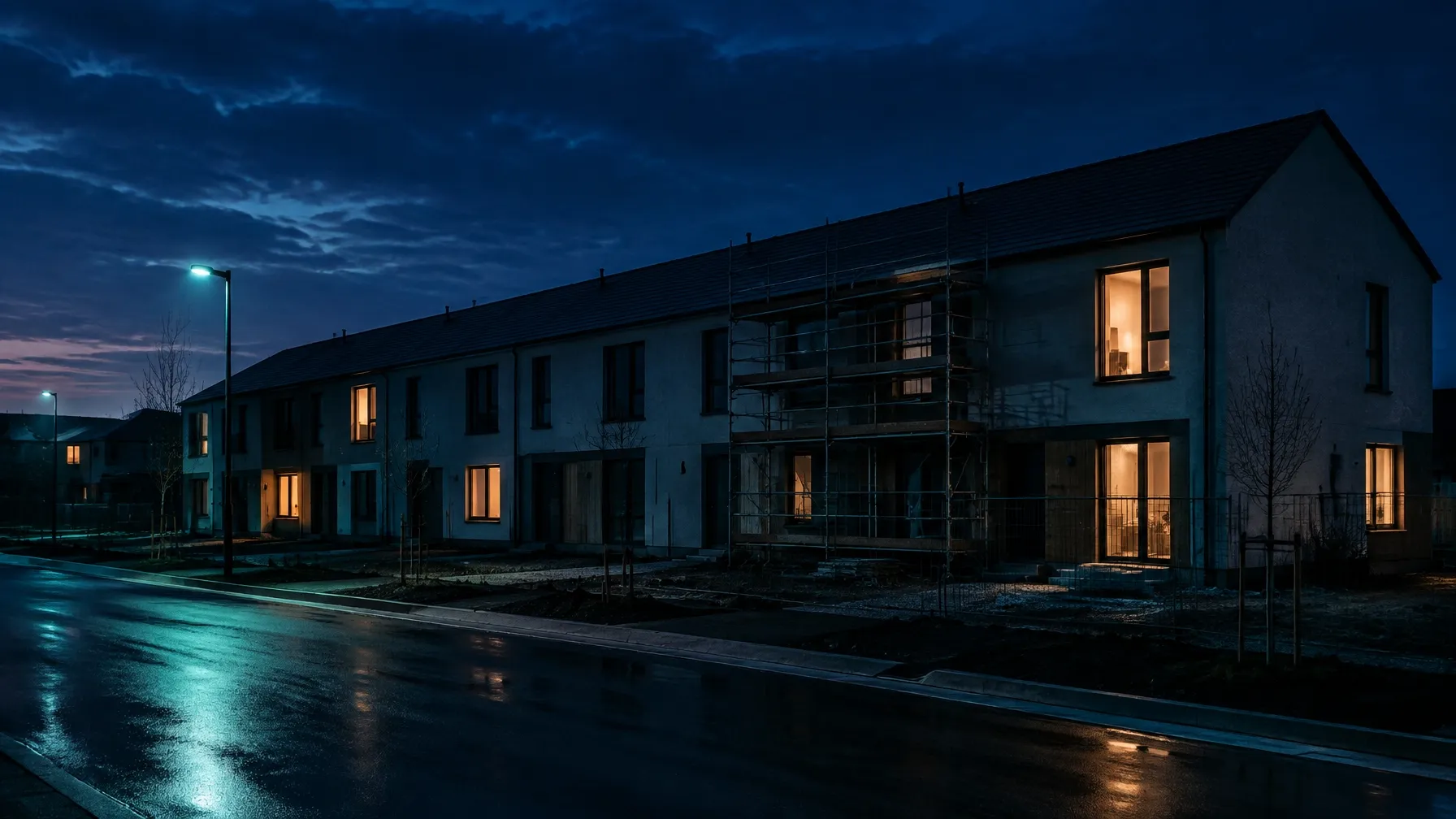
Why a Building Permit Does Not Mean a Project Is Ready to Build

Why a Building Permit Does Not Mean a Project Is Ready to Build

A building permit is an important project milestone. It confirms that an application has passed a defined regulatory process. It does not, by itself, confirm that the owner, design team, contractor, suppliers, and project controls are ready to execute the work.
That distinction matters.
A project may have an approved permit and still lack secured financing, coordinated construction drawings, confirmed material deliveries, sufficient site access, or a clear decision-making structure. Starting construction without resolving those conditions can create avoidable delays, rework, cost pressure, and disputes.
This is not a criticism of the permitting process. Regulatory clearance and execution readiness serve different purposes. The permit addresses one category of risk. The project team must manage the others.
What the Batangas City checklist tells us
The Batangas City building-permit checklist shows the breadth of documentation involved in a permit application.
Depending on the project, the checklist identifies requirements such as:
- A unified building-permit application
- Architectural, civil or structural, electrical, mechanical, sanitary, plumbing, and electronics permits
- Accessory permits for fences, excavation, scaffolding, sidewalks, temporary enclosures, signs, or demolition, as applicable
- Geodetic plans and survey-related documents
- Fire-safety documents
- Professional licenses and signatures
- A bill of materials, cost estimate, and technical specifications
- Proof of ownership or lawful possession
- Barangay, land-use, DPWH, and other applicable clearances
These documents help establish that the proposed work has been presented to the relevant authorities in the required form.
But notice what the checklist does not claim to do. It does not certify that the project has:
- Enough cash available throughout construction
- A completed procurement plan
- Coordinated issued-for-construction drawings
- Confirmed suppliers and lead times
- Adequate contractor manpower and equipment
- A functioning cost-control system
- A governance structure for decisions, approvals, and changes
That is the gap between regulatory clearance and execution readiness.

A permit is a clearance, not a construction operating system
A permit answers a regulatory question: Is the proposed work sufficiently documented for the applicable approval process?
Execution readiness answers a management question: Can the project team deliver the approved scope safely, coherently, and within an agreed commercial framework?
Those questions are connected, but they are not interchangeable.
A permit does not manage procurement. It does not release payments. It does not resolve a clash between structural and mechanical drawings. It does not assign who approves a variation order. It does not confirm that the selected contractor can mobilize when the owner is ready to start.
The project team must build that operating system separately.
Six readiness checks before mobilization
1. Confirm the financing and cash-flow plan
A project budget is not the same as available funding.
Before mobilization, the owner should understand:
- The total approved budget
- The source and timing of funds
- Monthly cash requirements
- Payment milestones
- Retention, advance-payment, and variation provisions
- Contingency for market movement and unforeseen work
A bill of materials or cost estimate supports the permit documentation. It should not automatically be treated as a complete financial-control plan.
The practical question is simple: Can the project maintain payment continuity from mobilization through completion?
2. Test site access and logistics
A construction site may be legally buildable but operationally difficult.
The team should confirm:
- Access for delivery trucks and equipment
- Storage and laydown areas
- Temporary utilities
- Worker entry and safety arrangements
- Neighboring properties and shared access
- Road restrictions or local coordination requirements
- Disposal routes for excavated or demolished material
These issues affect the sequence, cost, and productivity of the work. They should be resolved before the first major delivery: not after materials arrive at a site that cannot receive them.
3. Coordinate the design for construction
Permit drawings are essential, but construction often requires additional coordination and detail.
Before work begins, the team should establish whether the current package includes:
- Coordinated architectural and structural drawings
- Integrated mechanical, electrical, plumbing, sanitary, and fire-safety layouts
- Construction details and connection information
- Approved specifications
- Shop-drawing requirements
- Clear revision control
- A process for responding to requests for information
Design coordination is not merely a technical exercise. It protects the owner’s time and budget by reducing ambiguity before the work reaches the site.

4. Check contractor capacity, not only credentials
Professional licenses and signed documents are necessary parts of a compliant project. They do not reveal the entire operating capacity of the contractor.
The owner should also evaluate:
- Current workload
- Available supervisors and skilled workers
- Equipment and subcontractor commitments
- Experience with similar scope and complexity
- Quality-assurance and safety practices
- Reporting discipline
- Ability to manage procurement and documentation
A contractor’s capacity must match the project’s actual demands. This is especially important when multiple trades must work in a tightly coordinated sequence.
5. Establish cost controls before costs move
Cost control should begin before the first purchase order.
A practical system should define:
- The approved baseline budget
- Work-package budgets
- Procurement approval thresholds
- Purchase-order tracking
- Change-order procedures
- Committed cost versus actual cost
- Forecast-at-completion reporting
- Who can approve scope, cost, and schedule changes
This is where an owner-side dashboard can create management visibility. The goal is not to produce more reports. The goal is to create one reliable source of truth for what has been approved, ordered, spent, changed, and still exposed to risk.

6. Define governance and decision rights
Projects slow down when decisions have no clear owner.
Before mobilization, document:
- The owner’s representative
- The design authority
- The contractor’s project manager
- Approval limits
- Meeting cadence
- Escalation paths
- Document-control responsibilities
- Response times for technical and commercial issues
Good governance does not mean creating unnecessary bureaucracy. It means making sure the right person can make the right decision using current information.
The better question is: “Are we execution-ready?”
Instead of treating the building permit as the finish line, treat it as one gate in a larger readiness framework.
A useful preconstruction review can classify each area as:
- Ready: evidence is complete and the responsible person is assigned
- At risk: a gap exists but has a documented mitigation plan
- Blocked: the gap prevents safe, coordinated, or financially responsible mobilization
This approach makes project readiness visible.
It also supports a more practical conversation among owners, designers, contractors, and suppliers. Everyone can see what has been cleared, what remains open, and what decision is needed next.
For complex projects, the same principle applies to business operations more broadly. A signed agreement, approved budget, or completed registration may establish permission to proceed. It does not automatically create the systems required to execute well.
Build readiness into the project system
At IGRIS Balteus Construction, our Design & Build and construction services are shaped around the project’s actual needs. Depending on the client and scope, that may include general construction, design and build, cost-plus construction, direct-cost construction, or construction consulting.
The operating principle is straightforward: connect the scope, design, cost, procurement, schedule, and decisions before they become site problems.
A permit gives the project permission to move through a regulatory gate. Readiness gives the project the capacity to move forward with discipline.
That difference can determine whether construction begins with clarity: or with unresolved questions that become expensive later.
Source-check notes
- Primary source: Batangas City Building Permit Checklist, accessed for this draft.
- Reference: Presidential Decree No. 1096 / National Building Code materials.
- Company context: IGRIS Balteus Construction services, projects, and rough estimate request.
- NEEDS_SOURCE_CHECK: Confirm that the Batangas City checklist remains current before publication and verify which requirements apply to the specific project type and location.
- NEEDS_SOURCE_CHECK: Obtain advice from the project’s licensed professionals or the relevant Office of the Building Official before presenting any project-specific regulatory conclusion.
- This article does not state that any particular project failed, nor does it claim that building permits are legally insufficient. It explains the management distinction between approval documentation and construction execution readiness.
ChatGPT Work banner/image prompt
Create a premium, realistic editorial banner for a LinkedIn article titled “Why a Building Permit Does Not Mean a Project Is Ready to Build.” Show a construction project management team reviewing a large permit checklist, coordinated architectural and engineering drawings, a procurement schedule, and a cost-control dashboard on a table inside a real construction project office. Through the windows, show an active but orderly construction site with concrete structure, steel framing, material deliveries, and safe worker activity. The image should communicate the difference between regulatory clearance and execution readiness: not legal conflict or project failure. Use candid professional action, authentic Philippine construction context without fabricated government seals or logos, natural daylight mixed with realistic office illumination, tactile paper, concrete, steel, and safety-gear textures, strong spatial depth, and a premium corporate finish. Use the brand palette: navy #0D2040, deep navy #002147, teal #0D9488, copper #B87333, light page #EDF2F8, white #FFFFFF, and light border #E2E8F0. Use Montserrat for any minimal label and Lora only for a subtle accent. Avoid robots, cyberpunk effects, generic stock poses, unreadable fake document text, and invented official insignia. Format 16:9.
Image/reference research lane: Batangas City Government website and building-permit checklist. Use the document’s checklist structure as visual reference, not as an image to reproduce or alter.
CTA
Are you ready to scale? Is your Enterprise AI-ready?
To improve visibility across project scope, procurement, costs, decisions, and execution, visit https://geromeinocencio.figma.site/.
Scale your business with AI. Scale your business with me.
LinkedIn article metadata
- Article type: Thought leadership / practical project-readiness guide
- Target readers: Property owners, business owners, developers, project managers, design professionals, and enterprise decision-makers
- Suggested description: A building permit is an essential regulatory milestone: but it is not the same as execution readiness. Here are the financing, procurement, design, contractor, cost-control, and governance checks that should come before mobilization.
- Suggested keywords: building permit, project readiness, construction management, procurement, cost control, design coordination, project governance, Batangas construction, owner-side reporting
- Status: NEEDS_SOURCE_CHECK
Article control data
- Research date: 19 August 2026
- Primary topic: Construction and project-control readiness
- Audience relevance: Helps owners distinguish regulatory approval from the operational conditions required for responsible construction mobilization.
- Content angle: A permit is one project gate; not the complete execution system.
- Topic category: Construction / owner-side reporting / governance / project readiness
- Internal links: Services, Projects, Rough estimate
Ten-point draft structure
- A permit is an important milestone, but not a readiness certificate.
- The Batangas City checklist illustrates the scope of regulatory documentation.
- Regulatory clearance and execution readiness answer different questions.
- Financing and cash-flow continuity must be tested.
- Site access and logistics affect buildability.
- Permit drawings still require construction-level coordination.
- Contractor capacity must match project demands.
- Cost controls and change governance must exist before mobilization.
- Decision rights and reporting create management visibility.
- A readiness gate connects approval to disciplined execution.