
Steel vs. Concrete in 2026: The Real Trade-Off
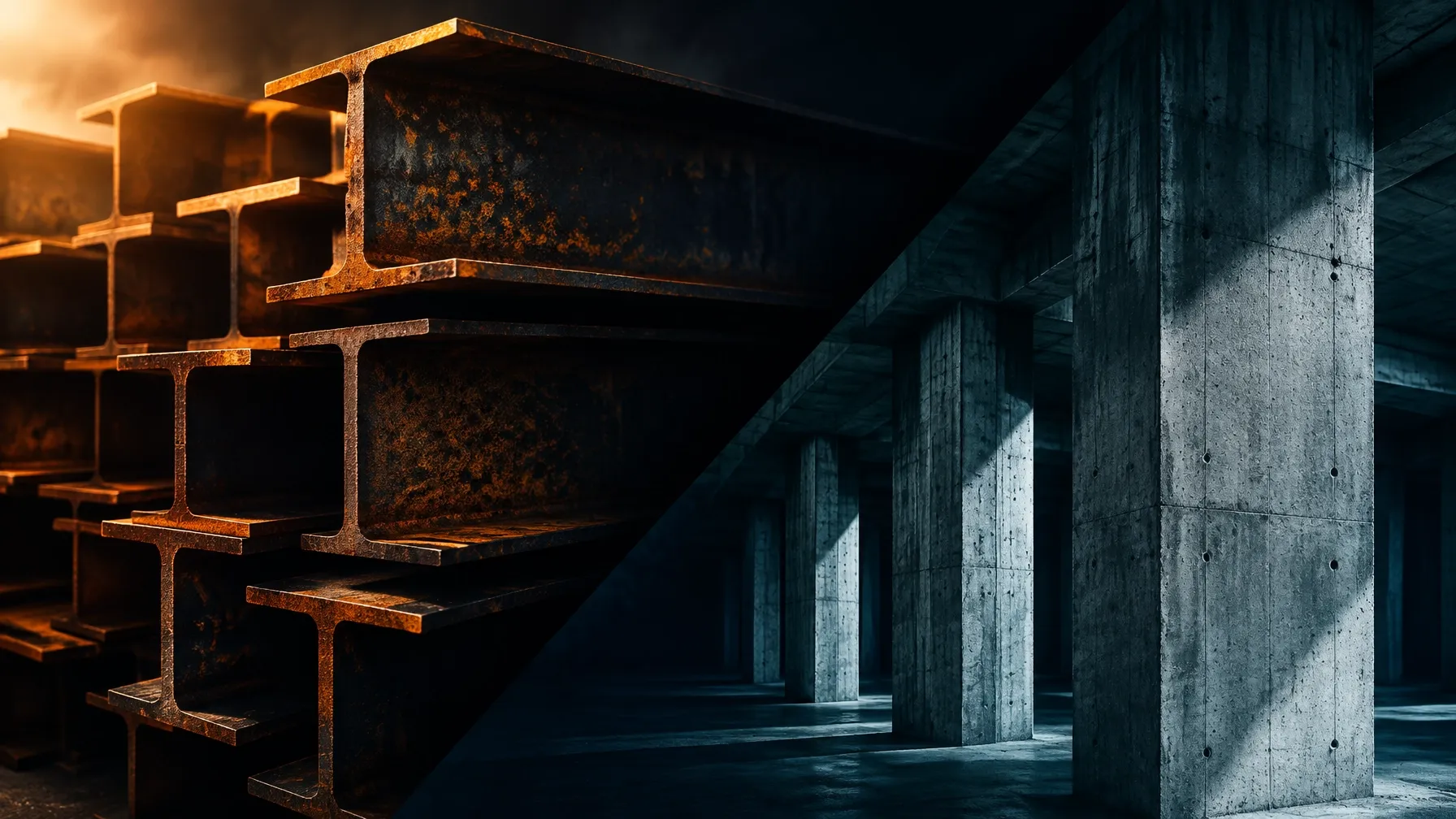
Choose the system that fits the whole building
Steel can offer long spans, lighter framing, and fast erection, while concrete can provide mass, stiffness, fire performance, and broad familiarity across the local construction workforce. The real comparison is the completed building and its operating life, not a price per tonne or cubic metre.
In the Philippines, exposure, transport, fabrication capacity, labour availability, fire strategy, and maintenance access all affect the outcome. A structural system that looks efficient on paper may lose its advantage if the supply chain or site sequence is poorly matched.
Compare the full set of consequences
- Programme: fabrication and erection versus formwork, curing, and site cycles.
- Performance: spans, vibration, fire protection, corrosion, seismic design, and robustness.
- Cost: materials, connections, foundations, equipment, labour, protection, and maintenance.
- Change: future penetrations, extensions, tenant fit-outs, repairs, and deconstruction.
Steel needs a clear corrosion and fire-protection strategy, especially in humid or aggressive environments. Concrete needs careful mix design, reinforcement detailing, curing, waterproofing, and quality control to avoid defects that become expensive after completion.
The best decision comes from an option study that tests both systems against the same brief and programme. Ask the team to show the assumptions, interfaces, and life-cycle implications so the owner can choose a building that remains useful, not merely a structure that was cheap to start.