Public Works Under Scrutiny: What Infrastructure Failures Reveal About Accountability
Public Works Under Scrutiny: What Infrastructure Failures Reveal About Accountability

Draft status: NEEDS_SOURCE_CHECK
This article uses reported developments involving the EDSA rehabilitation project as a lead. Claims about the Marilao river wall are not included as factual examples because the available research brief did not provide a primary investigation or official record.
Public infrastructure failures are rarely only construction problems.
When a newly rehabilitated road develops defects soon after completion, the public naturally asks: Who is responsible?
That question is important: but it is not the first question that project owners, agencies, contractors, and oversight bodies should ask.
The first question is:
Where did the control system fail?
A public works project can deteriorate because of design limitations, unsuitable materials, drainage conditions, workmanship, weak inspection, incomplete documentation, unrealistic schedules, poor maintenance, or a combination of these factors. Assigning blame before examining the full project record can produce headlines, but it does not necessarily prevent the next failure.
Recent scrutiny of reported defects on rehabilitated sections of EDSA illustrates why accountability must be examined across the entire project lifecycle: from planning and procurement to testing, acceptance, maintenance, and corrective action.
The reported EDSA defects raise a systems question
Reports published in August 2026 described potholes appearing along parts of the EDSA Busway only months after rehabilitation work was completed. The Department of Public Works and Highways reportedly attributed the damage to trapped rainwater and drainage conditions near concrete barriers, while lawmakers called for inquiries into the project’s planning, design, materials, construction methods, quality control, and contract management.
These are allegations, explanations, and areas of inquiry: not final findings.
A Senate investigation was reportedly sought after the deterioration became public. A separate House initiative also called for examination of project plans, engineering studies, material testing, inspection records, payment documents, variation orders, warranties, and defects-liability provisions.
That list is significant.
It shows that accountability is not limited to asking whether a contractor performed adequately. It also requires examining whether the project was designed for actual site conditions, whether the public agency verified the work properly, and whether the documentation can show what decisions were made and why.

Illustrative project-control visual; not an EDSA project record.
1. Procurement should begin with project readiness
Procurement is often treated as an administrative stage: prepare the bid documents, evaluate proposals, award the contract, and issue a notice to proceed.
That approach is incomplete.
A procurement process can be procedurally compliant and still produce a weak project if the underlying scope is unclear, the site conditions are poorly understood, or the engineering design has not been sufficiently developed.
Before a public works project is bid, decision-makers should be able to answer:
- What problem is the project solving?
- What site, environmental, and operational conditions must the design withstand?
- Are the drawings, specifications, quantities, and schedules coordinated?
- Have drainage, flooding, traffic, utility conflicts, and maintenance requirements been considered?
- Can the agency verify quality using objective and measurable acceptance criteria?
- Are risks assigned clearly between the owner, contractor, designer, and operator?
If these questions remain unresolved, procurement may transfer uncertainty into the construction stage.
Once construction begins, that uncertainty becomes more expensive. It can appear as change orders, delays, disputes, rushed decisions, or compromises in quality.
2. Quality assurance is more than checking materials
Quality assurance should not begin when a defect becomes visible.
It should operate through a documented chain of prevention, inspection, testing, approval, and correction.
For pavement and civil works, this may include:
- Approved material sources
- Laboratory testing and test frequencies
- Mix design verification
- Site inspection reports
- Weather and placement records
- Compaction and density results
- Drainage inspections
- Concrete and asphalt delivery records
- Geotagged photographs
- Nonconformance reports
- Corrective-action records
- Engineer and owner approvals
The purpose is not to create paperwork for its own sake. The purpose is to establish a reliable source of truth.
If a defect appears, project leaders should be able to trace the relevant decision path:
- What was specified?
- What was delivered?
- What was tested?
- Who inspected it?
- What exceptions were recorded?
- What was accepted?
- What maintenance or corrective work followed?
Without that record, every explanation becomes vulnerable to speculation.
3. Design accountability includes drainage and climate conditions
A road surface does not operate independently of the system around it.
Drainage, barriers, slopes, traffic loading, utilities, weather, maintenance, and pavement materials interact. A material that performs well in one environment may fail sooner when water is trapped, traffic is concentrated, or drainage paths are blocked.
This is why detailed engineering must address actual operating conditions rather than ideal assumptions.
For public infrastructure in the Philippines, rainfall and flooding are not unusual edge cases. They are foreseeable design considerations. If water management is critical to pavement performance, drainage should be treated as a core structural and operational requirement: not as a secondary feature.
The reported EDSA explanations make this point especially important. Whether the eventual investigation identifies design deficiencies, construction issues, drainage limitations, maintenance gaps, or another cause, the project record should show how water movement and heavy rainfall were evaluated before and after construction.
4. Contractor oversight must be active and evidence-based
Oversight is not the same as presence.
A representative at a project site does not automatically provide effective control. Oversight must include clear authority, timely inspections, independent verification where appropriate, and documented responses when work does not meet requirements.
A practical oversight system should define:
- Inspection hold points
- Approval responsibilities
- Testing authority
- Escalation procedures
- Nonconformance response times
- Documentation standards
- Payment verification controls
- Handover requirements
- Defects-liability procedures
The owner and contractor should not wait for the public to discover a defect before the project’s quality system responds.
Where public safety and public funds are involved, the standard should be higher than “the work was completed.” The more relevant question is whether the work was completed according to the approved design, verified through credible evidence, and accepted through a defensible process.

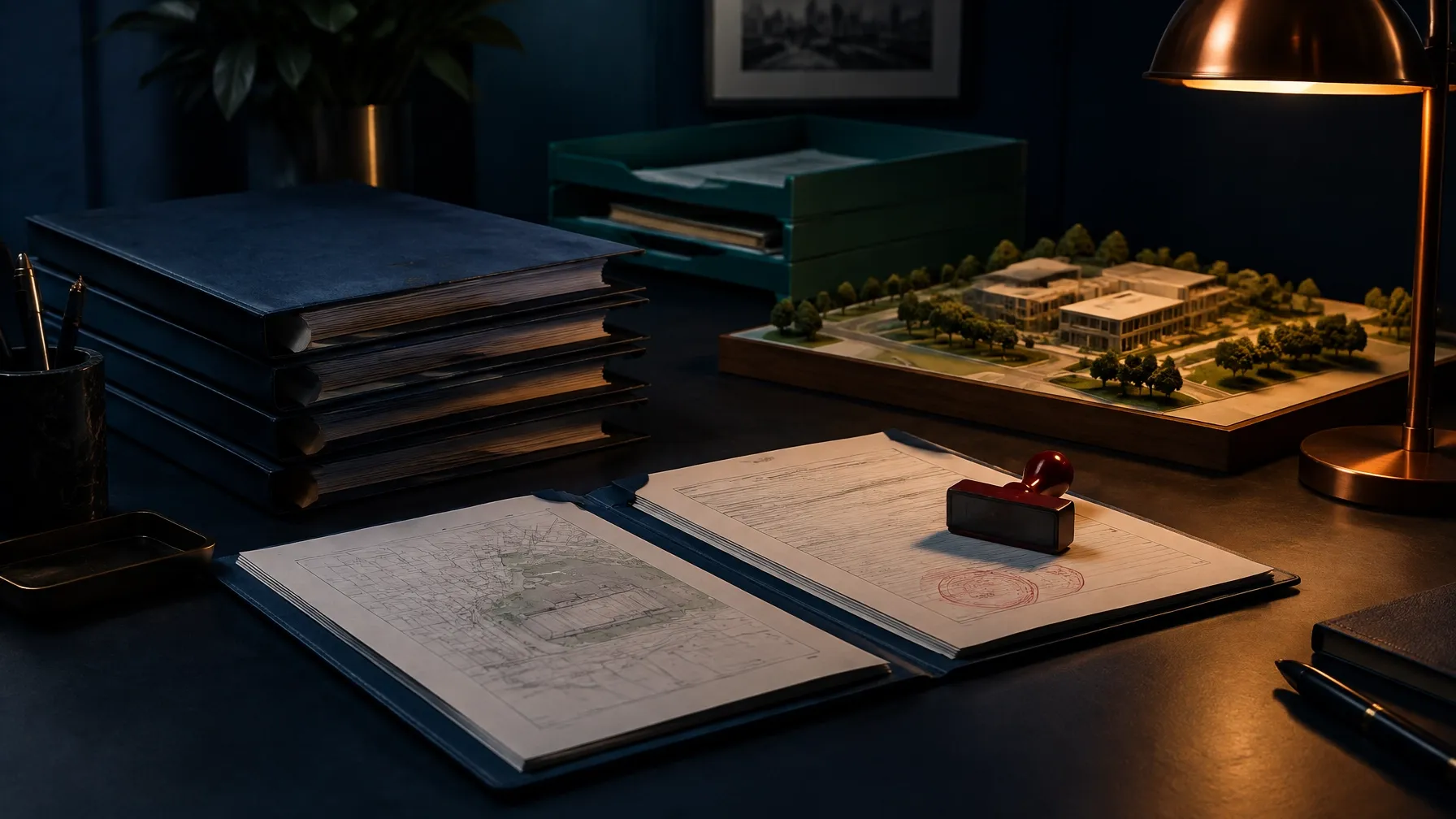
Illustrative planning visual; not a depiction of the EDSA rehabilitation project.
5. Documentation protects both the public and responsible professionals
Documentation is often seen as a burden during construction. In reality, it protects every legitimate participant.
A complete record can help distinguish between:
- A design problem and a workmanship problem
- A material failure and a drainage failure
- A construction defect and later third-party damage
- An owner-directed change and contractor deviation
- A maintenance issue and an original project deficiency
This distinction matters because public accountability must be fair as well as firm.
If an agency, contractor, consultant, or supplier is accused of contributing to a failure, the project record should be examined before conclusions are reached. Public criticism may be justified when negligence or misconduct is established, but responsible investigation requires evidence.
For business owners, the lesson is familiar: undocumented decisions become disputed decisions.
A connected project system should bring together contracts, drawings, revisions, inspection reports, test results, photographs, approvals, invoices, changes, and corrective actions. Artificial intelligence can help organize and surface patterns in these records, but human professionals must retain approval authority and responsibility for conclusions.
6. Accountability must continue after turnover
A project is not fully successful merely because it reaches substantial completion.
Owners must monitor performance after handover. Agencies must verify whether defects recur. Contractors must respond to legitimate warranty or defects-liability obligations. Oversight bodies must assess whether corrective actions address root causes rather than only visible symptoms.
This requires post-construction data:
- When and where defects appeared
- How severe they were
- What weather or traffic conditions existed
- Which repairs were performed
- Whether the repairs lasted
- Who authorized the work
- What the corrective work cost
- Whether the original design or specification should change
A geotagged condition assessment, paired with the original project documentation, can turn a public controversy into usable institutional learning.

Illustrative construction-operations visual; not a project-specific image.
The broader lesson for owners and business leaders
Infrastructure scrutiny reveals a principle that applies to every complex organization:
Accountability becomes stronger when decisions, evidence, approvals, and outcomes remain connected.
This is the foundation of an AI-ready operating model.
AI should not be used to create the appearance of control. It should help leaders see the actual state of a project or business:
- Which risks remain open?
- Which approvals are missing?
- Which costs changed?
- Which tests failed?
- Which issues keep recurring?
- Which decisions require human judgment?
- Which claims cannot yet be verified?
The goal is not to remove people from responsibility. The goal is to give responsible people better visibility before problems become public failures.
At IGRIS Balteus Construction, this principle supports our flexi-systemic approach: clear costing, open communication, coordinated decisions, and practical project visibility tailored to the client’s needs. Learn more through our services, Build Smart approach, and company background.
Public works deserve scrutiny. But scrutiny should lead to better systems: not only louder blame.
Are you ready to scale? Is your Enterprise AI-ready?
Scale your business with AI. Scale your business with me.
Source-check section
Status: NEEDS_SOURCE_CHECK
The following claims require verification against primary investigation documents, official records, or complete legislative materials before publication:
- The exact completion date, contract value, project scope, and contractor identity for each EDSA rehabilitation phase.
- The precise locations, dates, and causes of the reported potholes.
- Whether trapped rainwater and concrete barriers were formally established as contributing causes or were only preliminary explanations.
- The full text and current status of Senate Resolution 594.
- The full text and current status of the House resolution associated with the proposed inquiry.
- The exact requirements of the New Government Procurement Act concerning detailed engineering, environmental conditions, defects liability, and final acceptance.
- Whether contractor-funded repairs were formally ordered, completed, and accepted.
- Any claims involving the Marilao river wall. The current research set does not contain a primary investigation or official record for that issue, so it should not be added as a factual example without further evidence.
Research links reviewed
- Inquirer Opinion: Expensive EDSA potholes
- Philstar: Lacson seeks Senate probe into EDSA rehabilitation
- Philstar: Senate urged to probe EDSA repairs after potholes emerge
- ABS-CBN News: Dizon welcomes possible probe on EDSA potholes
- The Manila Times: Reported explanation involving trapped rainwater
- News5/Newswav: Reported House probe into premature EDSA deterioration
ChatGPT Work banner prompt
Create a premium editorial LinkedIn article banner about public infrastructure accountability in the Philippines. Show a realistic urban road and civil-infrastructure inspection scene after rainfall: pavement and drainage details in the foreground, two safety-compliant engineers in hard hats and reflective vests reviewing a tablet with a neutral project-control dashboard, and traffic infrastructure fading into the background. The scene must communicate evidence, quality assurance, procurement oversight, documentation, and public accountability: not scandal or sensationalism. Use authentic commercial photography with natural overcast daylight, realistic wet pavement, raw concrete, weathered metal, subtle depth of field, and a polished institutional finish. Use IGRIS brand colors sparingly: primary navy #0D2040, deep navy #002147, teal #0D9488, copper #B87333, light page #EDF2F8, and white #FFFFFF. Use Montserrat for any text and Lora only for a restrained accent. Do not include government seals, fabricated agency logos, identifiable public officials, defamatory symbols, exaggerated potholes, fictional statistics, or text claiming that a named party caused a failure. Do not present the image as an actual photograph of EDSA or Marilao. Format 16:9, suitable for a LinkedIn Newsletter Article hero image.
Image-reference and source website lanes
On-brand visual references
- IGRIS digital project-management dashboard
- IGRIS collaborative project-planning session
- IGRIS concrete-pouring operations
- IGRIS industrial construction-site overview
These images are illustrative brand references and should not be presented as photographs of the EDSA rehabilitation project or any other named public works project.
External reference lanes to verify before downloading or using images
Use the reviewed news pages above as starting points for identifying relevant photographs, but confirm ownership, licensing, attribution requirements, date, location, and editorial permissions before reuse. For stronger evidence, prioritize:
- Official DPWH project releases, engineering records, inspection reports, and audit documents
- Official Senate resolutions, committee materials, and hearing records
- Official House resolutions and committee materials
- Original contractor or project-owner records
- Geotagged site documentation with verified dates
No external news image should be treated as proof of causation. A generated editorial banner or licensed generic infrastructure photograph is preferable when a specific project image cannot be legally and independently verified.