Pax Silica and the Cost of AI Infrastructure

Pax Silica and the Cost of AI Infrastructure
Article 2 : LinkedIn Article / Newsletter Draft
Contrarian hook: The most important question about AI infrastructure is not how quickly we can build it. It is whether we can prove that its costs, risks, and benefits are being managed fairly.
Target reader: Business owners, infrastructure investors, public-sector decision-makers, project leaders, technology executives, and graduate students analyzing AI governance and development.
AI infrastructure is not only a technology decision
The Philippines’ discussion around Pax Silica is often framed as a race to attract semiconductor manufacturing, artificial intelligence investment, critical-mineral processing, and high-value jobs.
That framing is understandable. Countries are competing to build the infrastructure required for the next phase of the digital economy.
But a project of this scale should not be judged only by its investment headline.
It must also be examined through four connected questions:
- Where will the electricity come from?
- Where will the water come from?
- What environmental risks must be managed?
- Who has the right to participate in decisions involving the land and resources?
These are not obstacles to innovation. They are the foundation of responsible innovation.
According to a July 2026 GMA News explainer, Pax Silica is a United States-led initiative and economic-security framework involving the Philippines and other partner countries. A proposed 1,600-hectare AI-focused industrial hub in New Clark City, Tarlac, is expected to support semiconductor-related manufacturing, critical-mineral processing, and artificial intelligence industries.
The project’s supporters have pointed to potential employment, tax revenue, local value creation, and stronger participation in global technology supply chains.
Those potential benefits matter.
However, potential benefits do not eliminate the need for evidence.
The cost of AI is physical
AI is often discussed as if it exists mainly in software: models, applications, automation, and digital services.
In reality, AI depends on physical systems.
It needs:
- Semiconductor factories
- Data centers
- High-capacity transmission lines
- Reliable generation facilities
- Cooling systems
- Water treatment
- Roads, logistics, and housing
- Skilled workers and support services
The GMA explainer notes that large AI facilities can require substantial electricity and water. It also reported that some large data centers abroad use up to five million gallons of water per day for cooling.
That figure is not automatically a forecast for Pax Silica. It is a reference point showing why water demand must be assessed carefully rather than treated as a secondary engineering detail.
The same principle applies to electricity.
An AI industrial hub cannot operate reliably on optimistic assumptions about future supply. It needs a documented power plan that explains:
- Expected demand by development phase
- Firm capacity versus intermittent capacity
- Transmission requirements
- Backup arrangements
- Exposure to fuel-price volatility
- Responsibility for infrastructure costs
- Potential effects on other electricity users
If a project requires new power and water infrastructure, those systems should be treated as part of the project’s full cost: not as invisible background conditions.
Water cannot be managed through reassurance alone
The Bases Conversion and Development Authority has said that the project would avoid competing with groundwater use and instead consider rainwater, dams, or impounding areas as potential sources. It has also indicated that surplus water could be shared with nearby communities.
Those are important proposals.
They are not yet the same as a publicly verifiable water-security plan.
A defensible water plan should identify:
- The source and legal status of the water
- Seasonal availability
- Drought and flood assumptions
- Competing household and agricultural demand
- Treatment capacity
- Discharge and wastewater controls
- Recycling targets
- Monitoring responsibilities
- Emergency restrictions during water stress
This is where business leaders can learn from infrastructure governance.
A promise is not a control system.
A control system has an owner, a baseline, a measurement method, a reporting schedule, and a response when performance falls outside acceptable limits.
For a project with significant water requirements, the public should be able to distinguish between:
- Water withdrawal
- Water consumption
- Water returned to the system
- Water treated to the required standard
- Water reserved for communities and agriculture
Without that distinction, a single water number can create false confidence.
The Aeta land question cannot be treated as a footnote
The most sensitive issue in the Pax Silica discussion concerns the Aeta communities in Capas, Tarlac.
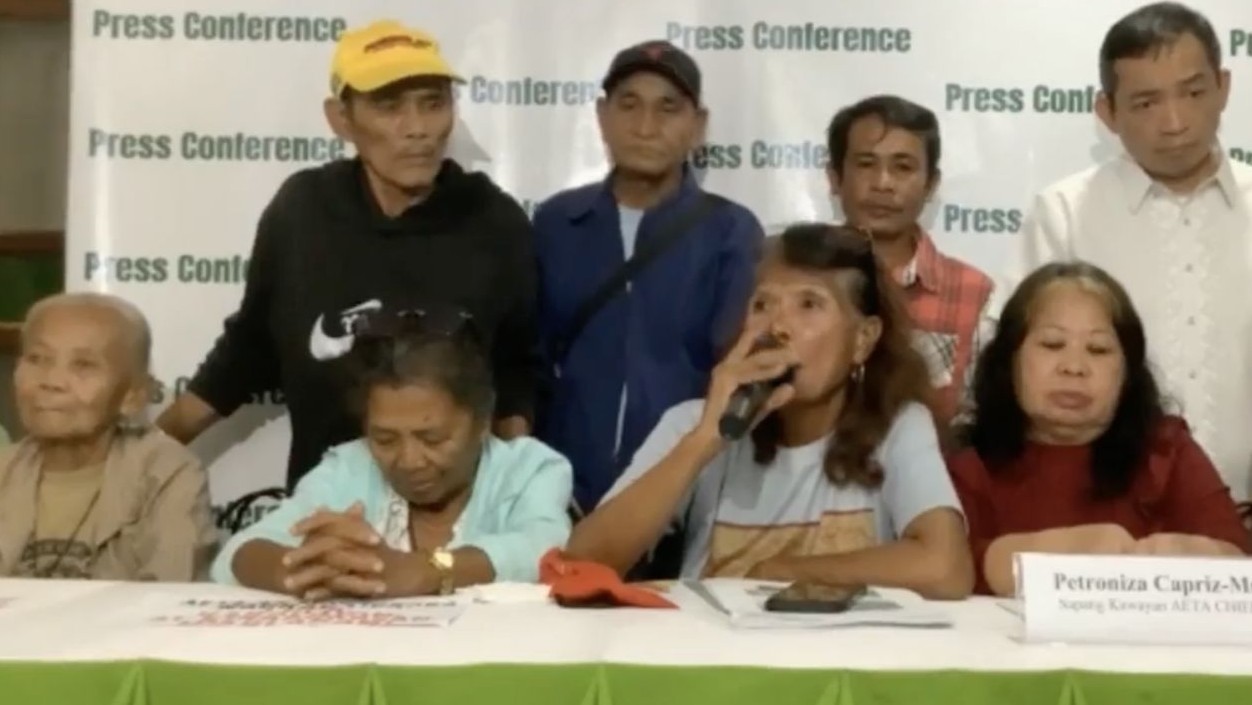
In an August 2026 GMA News report, indigenous Aeta leaders from Sitio Sapang Kawayan expressed opposition to the proposed project. The report said community representatives identified concerns involving ancestral land, agriculture, livelihoods, and environmental impact.
The same report also described a dispute over the legal and historical status of the land.
Aeta representatives said their community had been pursuing an ancestral-domain claim for decades. The report stated that they cited an application dating back to 1984 and an earlier National Commission on Indigenous Peoples endorsement in 1994 that, according to the community’s account, had not yet resulted in an approved ancestral-domain title.
The BCDA, meanwhile, has previously stated that the planned project site is public land and is not covered by an ancestral-domain title.
These are competing positions. They should not be presented as if one side has already been conclusively proven in a public article without reviewing the underlying records.
That is precisely why land status, ancestral-domain claims, and consultation processes require independent verification.
For any major infrastructure project affecting Indigenous peoples, the relevant question is not only whether a government entity holds a title or administrative claim.
The process must also address:
- Whether ancestral-domain claims are pending
- Whether the affected community has been properly identified
- Whether consultation was free, prior, and informed
- What information was disclosed before decisions were made
- Whether consent requirements apply
- How livelihoods, burial sites, farms, forests, and water sources may be affected
- How benefits will be distributed
- What remedy exists if commitments are not fulfilled
Development cannot become responsible merely because it is technologically advanced.
AI should improve visibility: not hide uncertainty
This is where AI-native management can contribute meaningfully.
AI should not be used to create a polished narrative that conceals unresolved land, water, or energy questions. It should be used to make those questions easier to see.
A connected project-control system could maintain a live evidence register containing:
- Land titles and survey boundaries
- Ancestral-domain documents
- Consultation records
- Environmental permits
- Water studies
- Power-supply commitments
- Construction schedules
- Contractor responsibilities
- Community-benefit commitments
- Open issues and accountable owners
The system could compare document versions, identify missing approvals, flag contradictory statements, and show which assumptions remain unverified.
But AI must not be confused with consent.
A model can organize records. It cannot speak for an Aeta community.
A dashboard can display consultation dates. It cannot prove that consultation was meaningful.
An automated report can identify a gap. It cannot decide whether the gap is legally or ethically acceptable.
Human approval remains essential: especially when decisions affect land, livelihoods, public resources, and vulnerable communities.
What business owners should take from Pax Silica
The lesson extends beyond national infrastructure.
Every business pursuing AI adoption faces a smaller version of the same problem.
Leaders want the benefits of AI, but they must also account for:
- Data quality
- Energy use
- Vendor dependence
- Cybersecurity
- Workforce impact
- Regulatory exposure
- Customer trust
- Decision accountability
The responsible question is not, “How quickly can we adopt AI?”
It is:
“Can we show where AI is being used, what it depends on, who approves its outputs, and what happens when it is wrong?”
That is the difference between adding an AI tool and building an AI-ready enterprise.
At IGRIS Balteus Construction, our work is grounded in a practical principle: complex projects become easier to manage when responsibilities, costs, decisions, and progress remain visible. The same principle applies to AI-native business systems.
A business does not become ready for scale by accumulating more tools.
It becomes ready by connecting its tools to reliable processes, clear ownership, and human judgment.
The real measure of progress
Pax Silica may create meaningful opportunities for the Philippines. It may strengthen advanced manufacturing, attract investment, and support new industries.
But those outcomes should be evaluated alongside the project’s resource requirements and social obligations.
The public deserves verifiable answers on:
- Energy capacity and cost
- Water availability and allocation
- Environmental safeguards
- Land and ancestral-domain status
- Consultation and consent
- Employment and revenue projections
- Accountability when commitments change
The goal should not be to reject technology because it has costs.
The goal should be to make those costs visible before decisions become irreversible.
Are you ready to scale? Is your Enterprise AI-ready?
Learn more about building connected, visible, and practical business systems at https://geromeinocencio.figma.site/.
Scale your business with AI. Scale your business with me.
Key claims needing source check
Status: NEEDS_SOURCE_CHECK
Before publication, verify the following claims with primary or independently confirmed records:
The final boundary and legal status of the proposed 1,600-hectare Pax Silica site
Source needed: BCDA master plan, land-title records, official project documents, and relevant government releases.The current status of the Aeta ancestral-domain application and any applicable Free, Prior and Informed Consent process
Source needed: NCIP records, official certifications, community-submitted documents, and legal analysis under the Indigenous Peoples’ Rights Act.Project-specific electricity demand, generation mix, transmission requirements, and infrastructure cost
Source needed: BCDA, Department of Energy, National Grid Corporation of the Philippines, feasibility studies, and published technical plans.Project-specific water demand, water source, treatment design, recycling targets, and community-allocation commitments
Source needed: BCDA, National Water Resources Board, Department of Environment and Natural Resources, water-resource studies, and environmental documents.Employment, tax-revenue, and investment projections
Source needed: BCDA, Department of Trade and Industry, Board of Investments, and official economic-impact studies.Whether land acquisition, construction, or other project activity has already commenced
Source needed: official notices, permits, procurement records, site-development records, and verified local reporting.
Suggested ChatGPT Work banner/image prompt
Create a premium editorial LinkedIn article banner about the public-interest cost of AI infrastructure in the Philippines. Show a realistic documentary-style transition between a large industrial technology development zone and an Aeta community landscape in Capas, Tarlac: broad agricultural land, forested foothills, a distant industrial construction area, water infrastructure, transmission corridors, and a small group of community representatives engaged in a serious consultation. Do not depict a specific confirmed Pax Silica facility unless supported by a supplied reference image. The composition should communicate tension between semiconductor and AI investment, electricity and water demand, environmental responsibility, and Indigenous land rights. Use authentic commercial photography, natural daylight, realistic construction materials, subtle depth of field, and candid human interaction. Apply IGRIS brand colors through restrained graphic overlays only: navy #0D2040, deep navy #002147, teal #0D9488, copper #B87333, light background #EDF2F8, white #FFFFFF, and light border #E2E8F0. Use Montserrat for any headline text and Lora only for a short emphasis line. Avoid cyberpunk imagery, robots, glowing servers, fabricated government seals, invented logos, identifiable political figures, protest exaggeration, and visual claims that imply a final project outcome. Format: 16:9, high-fidelity editorial banner, no unnecessary text except the title “Pax Silica and the Cost of AI Infrastructure.”
Image-research and reference lanes
Use these websites as visual and factual reference lanes for the ChatGPT Work prompt. Confirm image rights and attribution before downloading or reusing third-party images:
- GMA News: Explainer: Pax Silica and public concerns
- GMA News: Aeta concerns regarding ancestral land in Capas, Tarlac
- IGRIS Balteus Construction projects
- IGRIS Balteus Construction services
- IGRIS Balteus Construction Build Smart approach
The documentary Aeta image used above is sourced from the GMA News article and should be credited to GMA News / Kamuning Bakery Cafe media forum if reused outside this draft. The IGRIS images below are illustrative brand assets and do not depict Pax Silica.

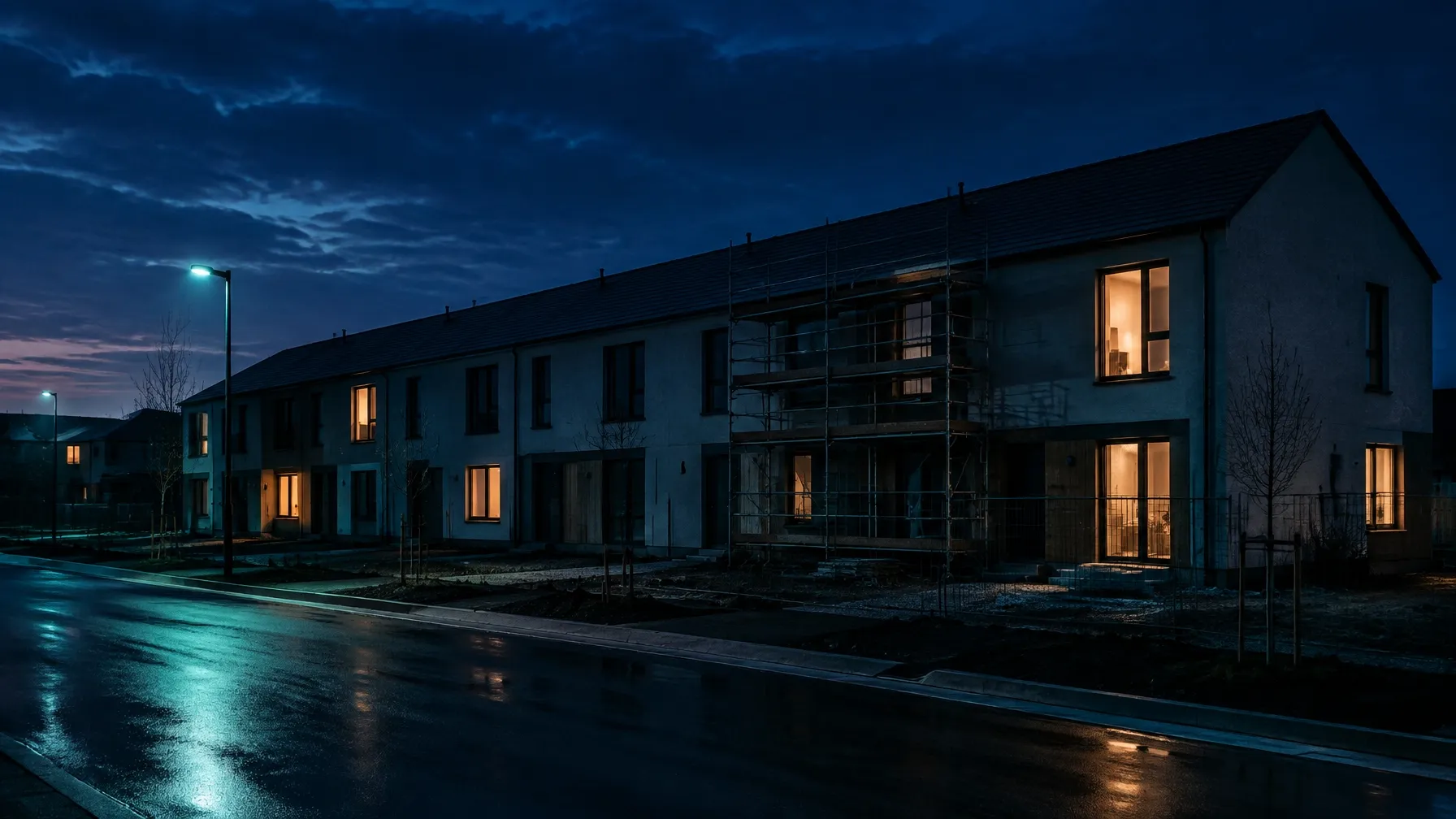
Illustrative IGRIS Balteus Construction image. This does not depict the Pax Silica project.

Illustrative IGRIS Balteus Construction image representing connected project visibility.

Illustrative IGRIS Balteus Construction image representing human review and accountable decision-making.